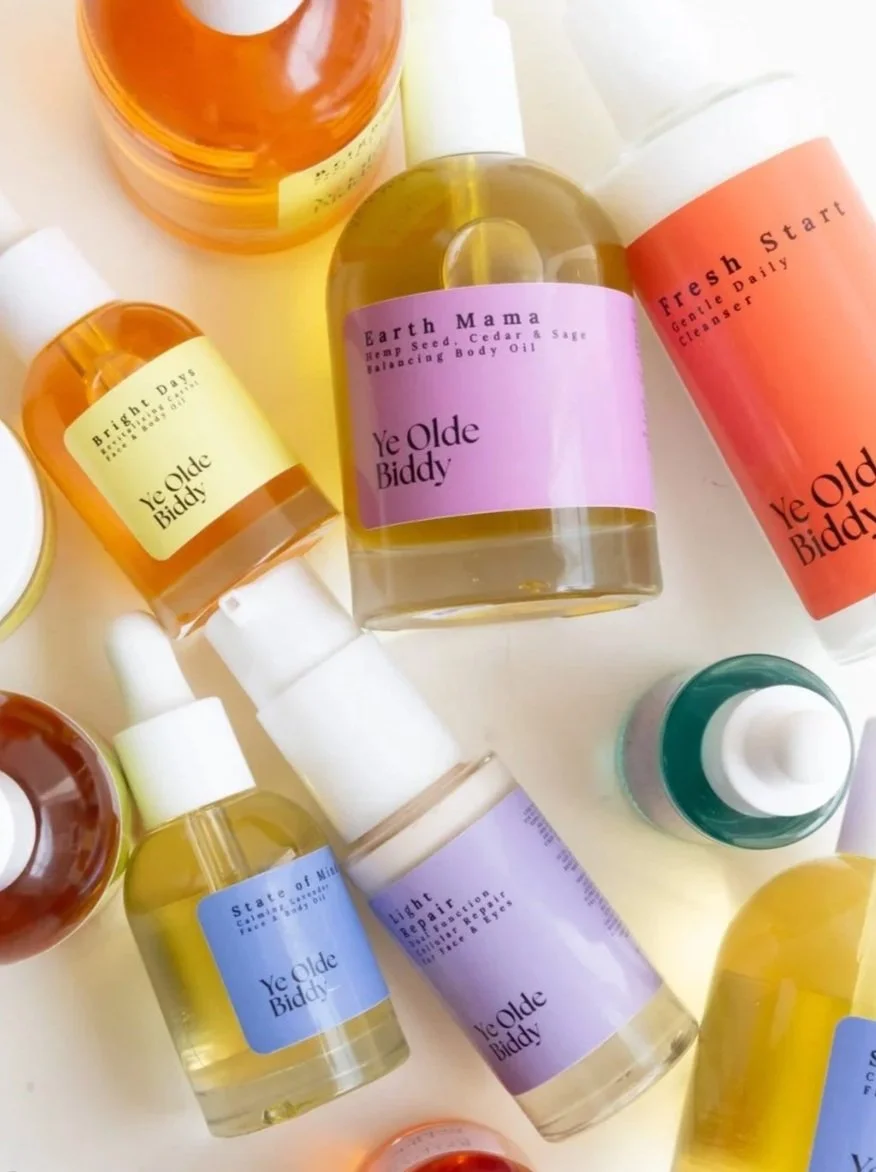
Ye Olde Biddy was named because I wanted to poke a little fun at how seriously the skincare industry can take itself.
There’s so much pressure wrapped up in the beauty world. So much anxiety. So much status signaling.
And underneath all of it is the suggestion that youth is somehow the highest form of value a person can hold.
At a certain point, it all started feeling absurd to me.
Not because I don’t care about skincare or beauty — clearly I do.
But I became tired of the fear-based messaging, the perfectionism, and the idea that ageing is something women are expected to quietly battle for the rest of their lives.
I wanted to create a skincare brand with a little more perspective. Something results-driven, yes, but also alive, self-aware, and connected to actual human experience.
The name itself carries a few layers.
The phrase “Ye Olde” became popular during industrialization when society was changing rapidly and people were nostalgic for older ways of living and working.
Whether real or imagined, there was a longing for craftsmanship, familiarity, and connection to things that felt more rooted as daily life became increasingly mechanized.
That feels familiar now.
We’re living through another massive technological shift. Everything moves quickly. Trends cycle overnight. Much of modern life happens through screens.
At the same time, people seem increasingly drawn toward gardening, baking, sewing, mending, herbalism, vintage objects, slower rituals, and reconnecting with the physical world around them.
Then there’s the word “Biddy.”
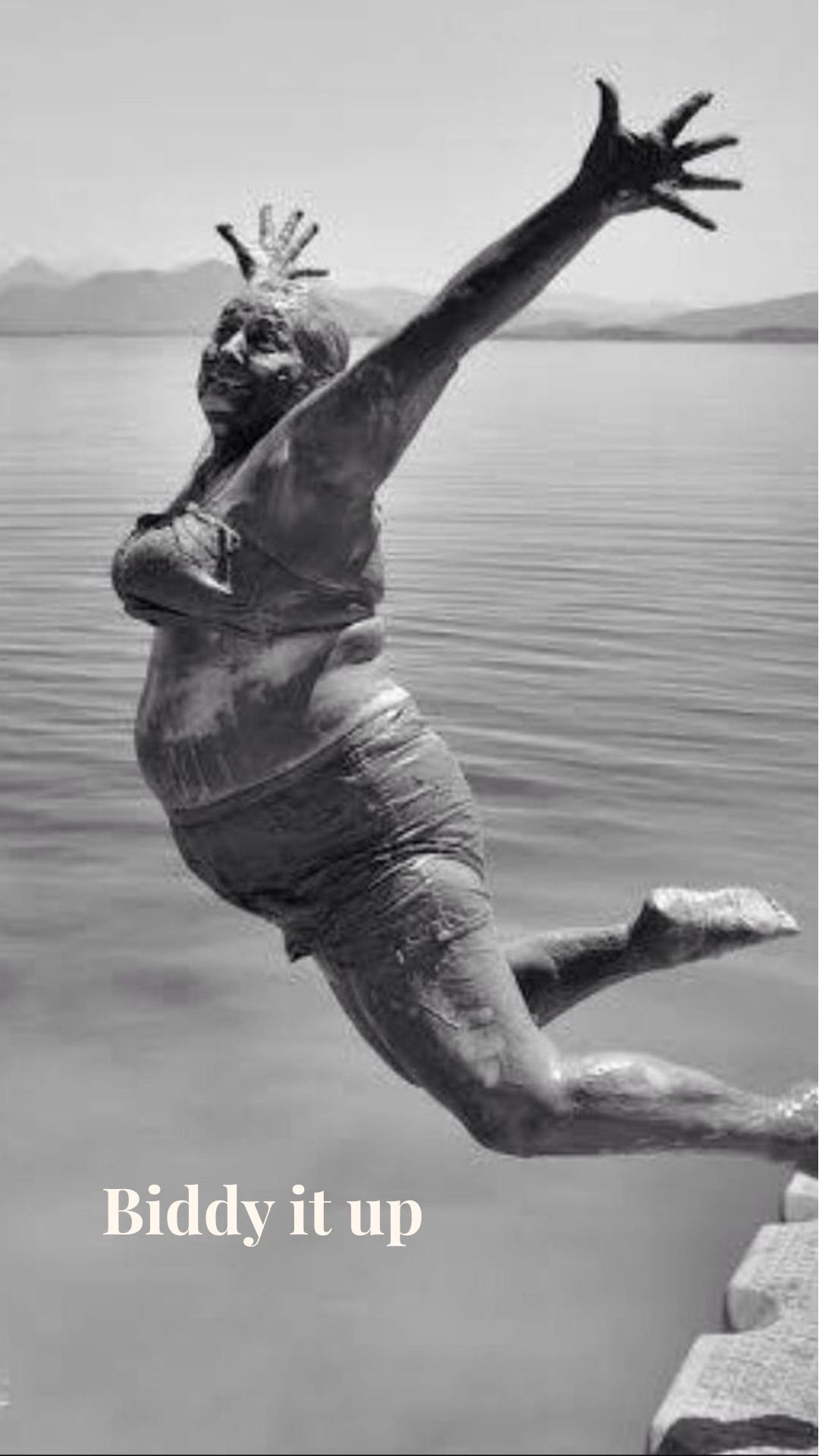
Originally, it meant chicken. Later it became a dismissive term for older women — usually women considered loud, opinionated, meddling, overly social, or inconveniently visible.
Which, honestly, only made me like it more.
Historically, the things women did together — talking, gathering, sharing information, exchanging stories, caring for families and communities — were often trivialized while quietly holding entire social structures together.
To me, putting “Ye Olde” and “Biddy” together felt funny in a way that also said something real.
It pokes at our discomfort around ageing. It pushes back a little against the idea that women lose value as they become older, more complex, more outspoken, or less interested in performing perfection.
And it reflects a growing desire many people seem to feel for connection — across generations, to the natural world, and to more meaningful ways of living and caring for ourselves.
Mostly, though, I just wanted to create a brand that felt intelligent, beautiful, grounded, and human, with a name that didn’t take itself too seriously.